


Building a better fence
The Fence at the Top: Why Prevention Beats the Ambulance Every Time
For years, society has treated mental health like an ambulance waiting at the bottom of that cliff, intervening only when a crisis occurs.
Instead of only helping to support people at the bottom of the 'cliff', we need to change the rhetoric and move to a more protective way. It is not just about physical health, but our emotional and mental wellbeing as well.

When it comes to our physical health, the blueprint for a protective lifestyle is universally understood.
We know that creating good habits around high-quality sleep, balanced nutrition, and regular movement are our best defenses against illness.
We use these daily habits as preventative medicine to reduce the need for drastic interventions later.
We don't wait for our bodies to completely break down before taking care of them; we proactively train them.
It is time to apply this exact same approach to our minds.
Mental health is simply health, and just like your body, your brain is a muscle that requires regular, intentional "reps".
Stronger mental health is like stronger physical health!
S.A.D.S.a.M
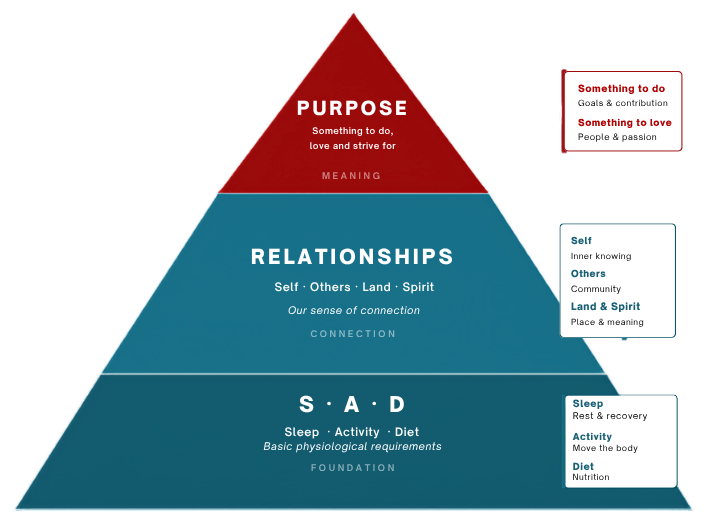
Framework to building a stronger mental life
S.A.D : The basic physiological requirements we need
I use this often in my MHFA teaching - SAD is a good way to think about helping or hurting our health (both mentally and physically).
SLEEP: Good healthy regular sleep vs poor sleep
ACTIVITY: Moving, exercise, out & about vs an inactive lifestyle
DIET: 'Anything we put into our bodies' - Nutritious food / hydration vs processed or harmful intake
Think about the items above - if you don't sleep well - hows your mental health?
If you don't move and are inactive, or eating/drinking stuff that does not energise - hows your mental health?
Relationships/ Social Connection
If sleep, diet, and exercise are the preventative medicine for the body, what is the equivalent for the mind?
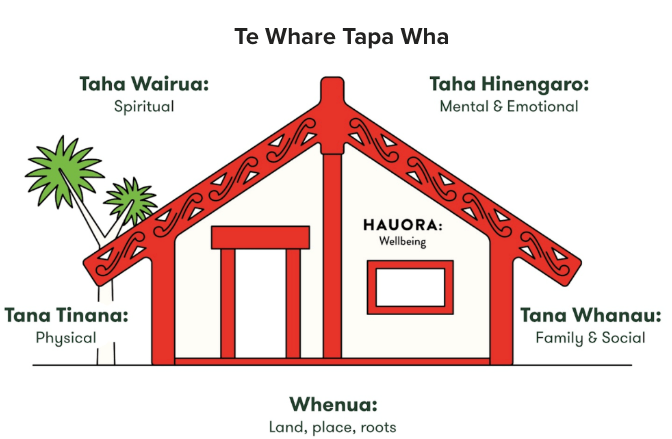
The answer lies heavily in our relationships and our sense of connection. In the holistic Maori health model by Sir Mason Drurie -
Te Whare Tapa Whā, taha whānau (social wellbeing) and taha tinana (physical wellbeing) are load-bearing walls of the exact same house, along with our mental, emotional, and spiritual wellbeing.
Having a sense of belonging and maintaining connections with family, friends, and colleagues are what build and strengthen our resilience.
Protective factors like healthy social conditions provide a literal shield against the development or impact of health challenges.
Conversely, a lack of connection can be devastating.
When people feel unseen or unheard, they can fall. Just as a poor diet slowly degrades physical health, isolation and a lack of genuine connection erode mental fitness over time.
Purpose/ Meaning
"The Why"
If sleep, diet, and exercise are the medicine, and relationships are the shield, then Purpose is the engine. It is what drives us forward when the path gets steep.
Viktor Frankl, a psychiatrist and Holocaust survivor, observed something profound in the concentration camps: those who survived weren’t necessarily the strongest physically; they were those who had a meaning to live for. He famously noted:
"He who has a 'why' to live for can bear almost any 'how'."
When we lose our sense of purpose, we often feel "empty" rather than just "tired". In the workplace, purpose doesn't always mean saving the world—it means knowing that what you do matters to someone else or contributes to a goal you value.
Building Your "Why"
Purpose isn't something you find; it's something you build through small, intentional choices. It is the "tread on your tire" that gives you grip on the road.
Identify your "Big Rock": What is the one thing that truly matters to you this week?.
Connect to others: Often, our greatest purpose comes from how we support those around us.
Stay curious: A life of growth and learning is a life of purpose.
Check your Purpose: Do you have a "why" that gets you out of bed, or are you just going through the motions?.
Purpose is the internal "fence at the top of the mountain" that prevents the fall into hopelessness.
Look after your S.A.D.S.a.M
Sleep. Activity. Diet. Social connection and Meaning
Do a Mental Fitness course
We share practical, science-backed content across key Mental Fitness areas and hopefully articles to ponder and ideas to expand your thinking and maybe make your life better.
New content is added regularly so subscribe below to get the latest news.
Neuroscience - how your brain actually works, in plain English
Mental Health - how to notice, support, and help yourself and others build mental resilience
Performance - how to train your mind like an athlete trains their body
Habits - How to create great habits and remove ones that don't serve
Musings - Thought pieces, articles to ponder and ideas to expand your thinking
Newsletters - copies of our latest thinking
No jargon. No crisis framing.
Just useful tools you can put to work today.
Welcome to your training ground.
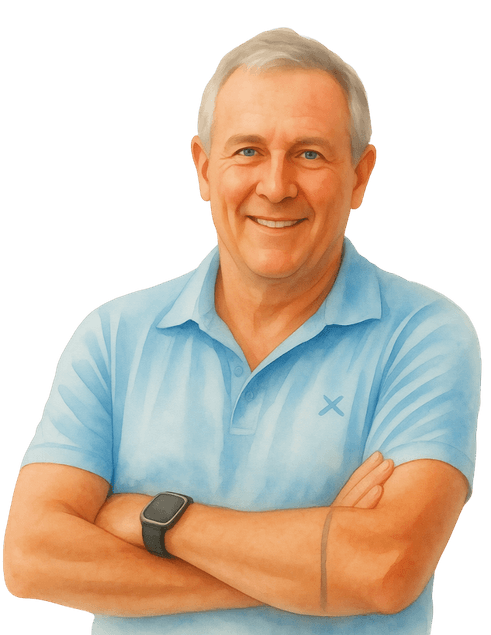
Gary Walker, Mental Fitness Coach
Subscribe to our newsletter - "Train your Brain"
Our short newsletter is filled with life-hacks, 7 minute brain training sessions, Neuro-Nudges and a whole of interesting ways to think.feel.better.
...get a copy of our FREE
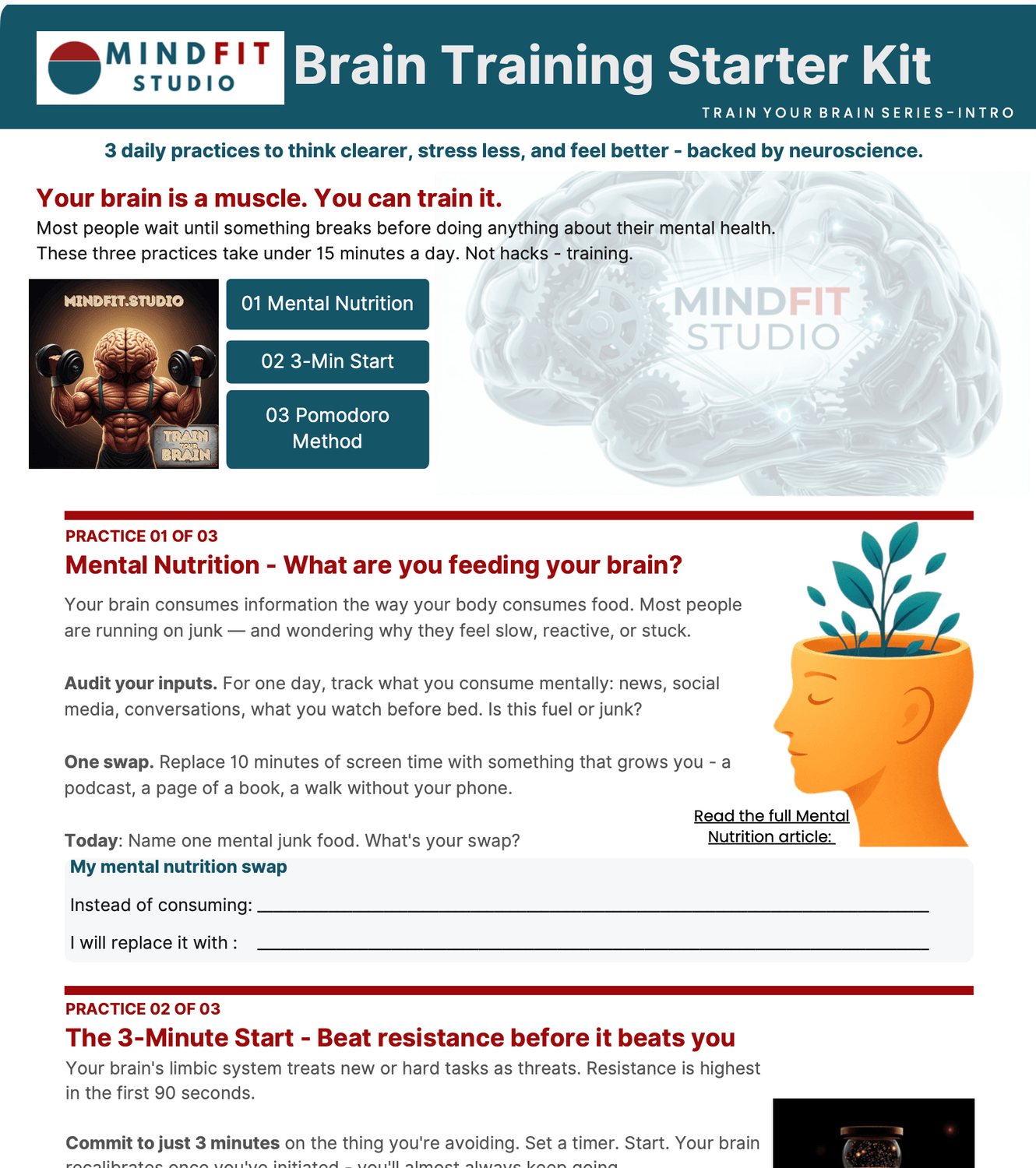
Brain Training Starter Kit
We created something special - our "Brain Training Starter Kit" has practical hints, tips and anti-procrastination tricks.
For now we are giving it away to those who subscribe to our regular newsletter
It's a sample from our larger Neuroscience based book providing 30 days of Brain training practices.
Copyright G2S T/a MindFIT.Studio
2026 - V1.8